
Responding to climate change
Basic Concept
Climate change is having various impacts on the natural environment, including ecosystems, as well as on people's lives and business activities, and there are concerns that these impacts will become even more severe in the future. In light of this situation, we recognize that addressing climate change is a critical issue. We will reduce GHG emissions from our business activities by considering both the impact of our business activities on climate change and the impact of climate change on our company, promoting efforts to reduce GHG emissions from our business activities and to realize a carbon-neutral society through our business, while minimizing the risks posed by climate change.
Governance
As a trading company, our group handles a diverse range of products, and we recognize the potential for widespread impacts from climate change. Therefore, based on the recommendations of the TCFD (Task Force on Climate-related Financial Disclosures), we are actively disclosing information about the impact of climate change on our group and our response efforts. Furthermore, we position climate change response as one of our key priorities, aiming for sustainable corporate value enhancement while coexisting with the environment and society.
As part of our governance structure, we have established a Sustainability Promotion Committee, chaired by the executive officer in charge of the corporate division, and composed of members selected from the corporate and sales divisions. This committee deliberates and examines important issues related to climate change, plans and formulates countermeasures under the direction and supervision of Board of Directors, and decides on the response after discussion at Board of Directors.
The management team reviews the assessment results and management status of climate change risks and opportunities, which are submitted to Board of Directors and Management Committee by the Sustainability Promotion Committee, and directs improvements or revisions to business plans as necessary. The committee's activities are reported to Board of Directors twice a year.
Strategy
Given the uncertainties arising from climate change, we regularly use scenario analysis methods to identify risks and opportunities. We consider the potential financial impacts and prioritize responses to risks and opportunities, referring to publicly available scenarios regarding the future impact of climate change on our business.
For fiscal year 2025, we established two temperature ranges, the "4°C scenario" and the "1.5°C scenario," and analyzed the impact on all of our group's businesses over a timeframe of 2030 and 2050.
Scenario premise
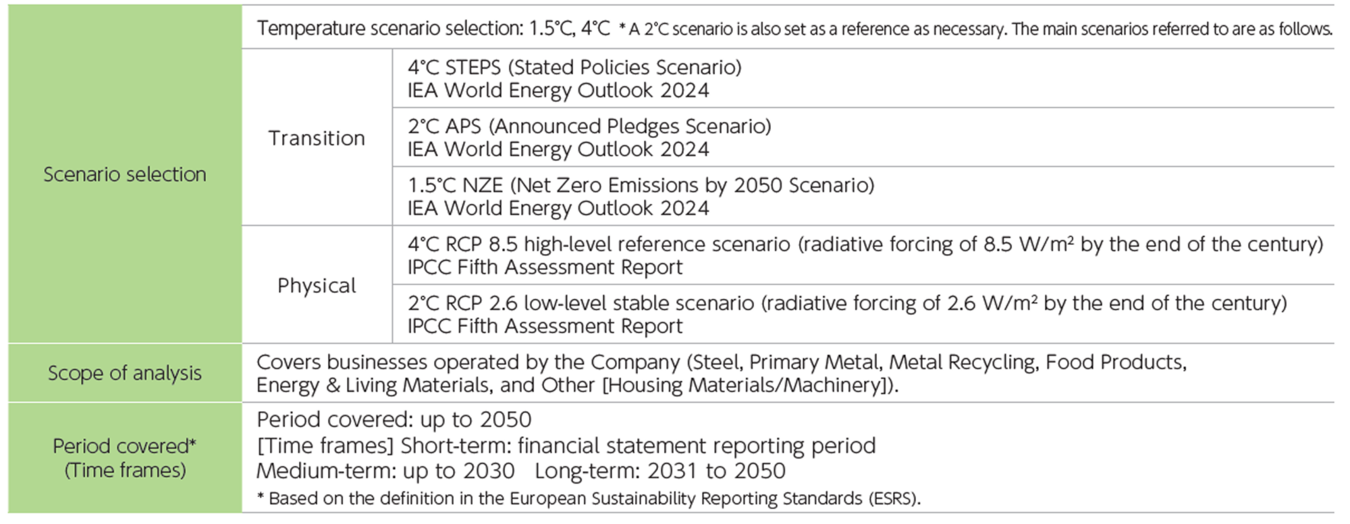
Major risks and opportunities due to climate change
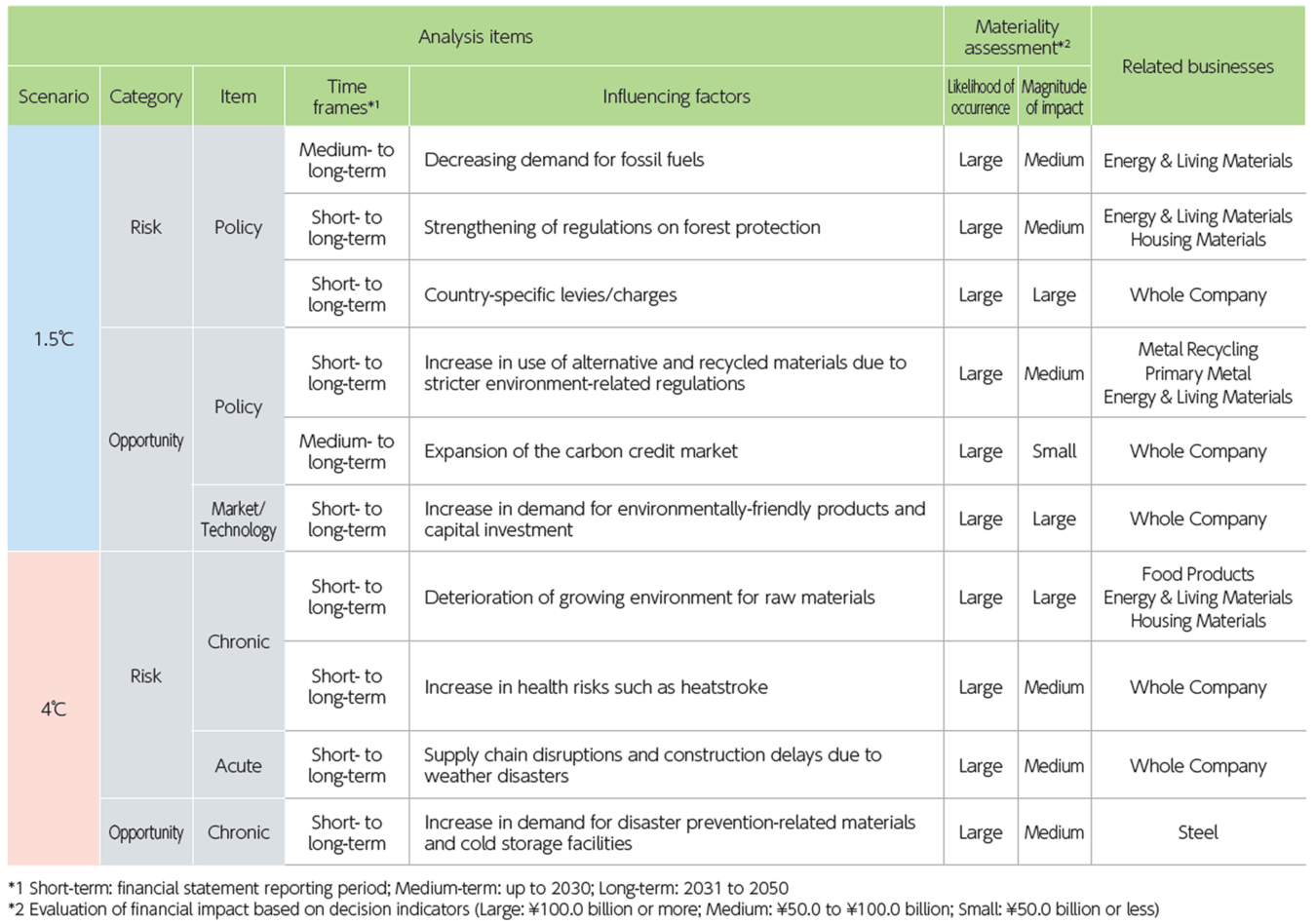
Overview of the financial impact on the business based on each scenario
1.5℃ scenario
In this scenario, we assume that, in order to achieve carbon neutrality, the public and private sectors will work together to promote climate change mitigation measures, amidst the expansion of the market for decarbonization-related products, strengthening of policy regulations such as the introduction of a carbon tax, and structural changes in the energy market. Within our group, we anticipate increased demand for recycled materials, biomass energy, and battery metals essential for electrification, while there are concerns about the risk of declining sales for fossil fuel-derived products. Furthermore, the introduction of a carbon pricing system may result in costs corresponding to environmental impact being added to the production costs of products, and we believe that the increased need for environmentally friendly products and sustainable raw materials will lead to the creation of new business opportunities.
4℃ scenario
This scenario assumes that efforts to mitigate climate change will not progress sufficiently, and rising temperatures will lead to the manifestation of physical risks such as floods, storm surges, and more frequent extreme weather events. In such an environment, companies will need to be resilient to the physical impacts caused by climate change. Due to the nature of our business, which involves a wide supply chain and inventory assets, our group is concerned about supply chain disruptions and damage to inventory and buildings due to weather-related disasters. On the other hand, with the growing awareness of disaster prevention, the steel materials and other products we handle that are used to reinforce social infrastructure are expected to contribute to stakeholders and local communities from the perspective of adapting to climate change.
Risk and opportunity response policy
Our group recognizes, through scenario analysis, that climate change is a critical issue that requires attention in terms of both risks and opportunities, and we intend to take appropriate measures to address these. In particular, we believe that metals and energy-related products will be significantly affected by changes in demand due to climate change, and we recognize the need to consider business strategies that take into account future market conditions.
The current status of our considerations regarding the risks and opportunities we have identified is as follows:
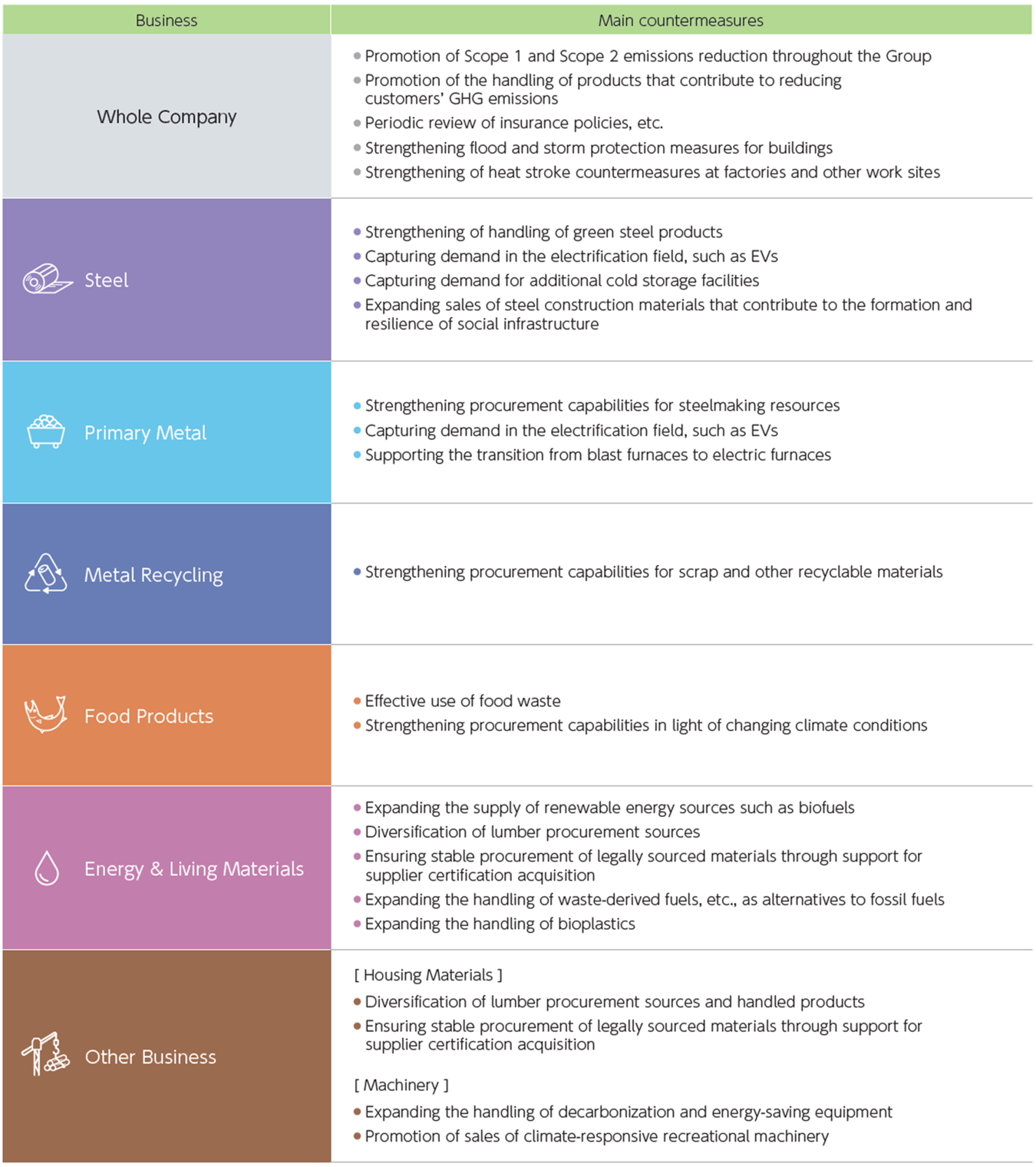
Risk Management
Within our group, we currently have a system in place to manage climate change risks, with the Sustainability Promotion Committee playing a central role under the direction and supervision of Board of Directors. This committee collects information, identifies and evaluates risks and opportunities, and reports the results to Board of Directors. Based on the identified and evaluated risks, management formulates business plans and makes investment decisions, while also incorporating risk mitigation measures into daily business activities as appropriate to manage climate change risks.
We utilize scenario analysis methods to identify climate change-related risks and opportunities. In assessing their importance, we use a three-tiered evaluation system based on two axes: the estimated timing of occurrence, the scale of financial impact, and the likelihood of occurrence. Once identified and assessed, we consider prioritizing responses to identified and assessed risks and opportunities, taking into account their relevance to other sustainability issues, before moving on to the consideration and implementation of specific countermeasures.
At our company, we designate risks that have a particularly significant impact on our operations as important risks, and we recognize climate change as one of those risks with a major business impact. We have established Risk Management Dept. to specialize in managing these important risks, and we are building an integrated risk management system on a consolidated basis by formulating necessary policies and developing regulations, etc., in cooperation with the relevant departments, so that risks can be managed effectively.
Indicators and Goals
GHG emission reduction targets
As part of our group's commitment to achieving carbon neutrality, which we have identified as one of our material priorities, we have formulated medium- to long-term reduction targets using GHG emissions as an indicator. The targets are as follows:
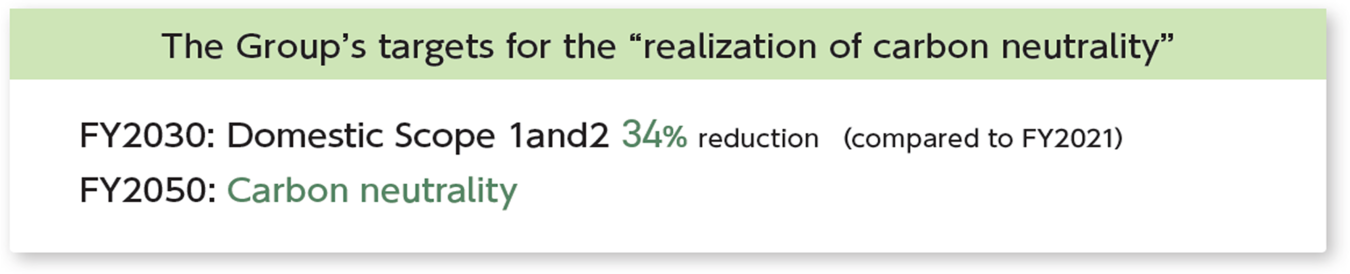
Our group's domestic (HANWA standalone + domestic consolidated subsidiaries) GHG emissions
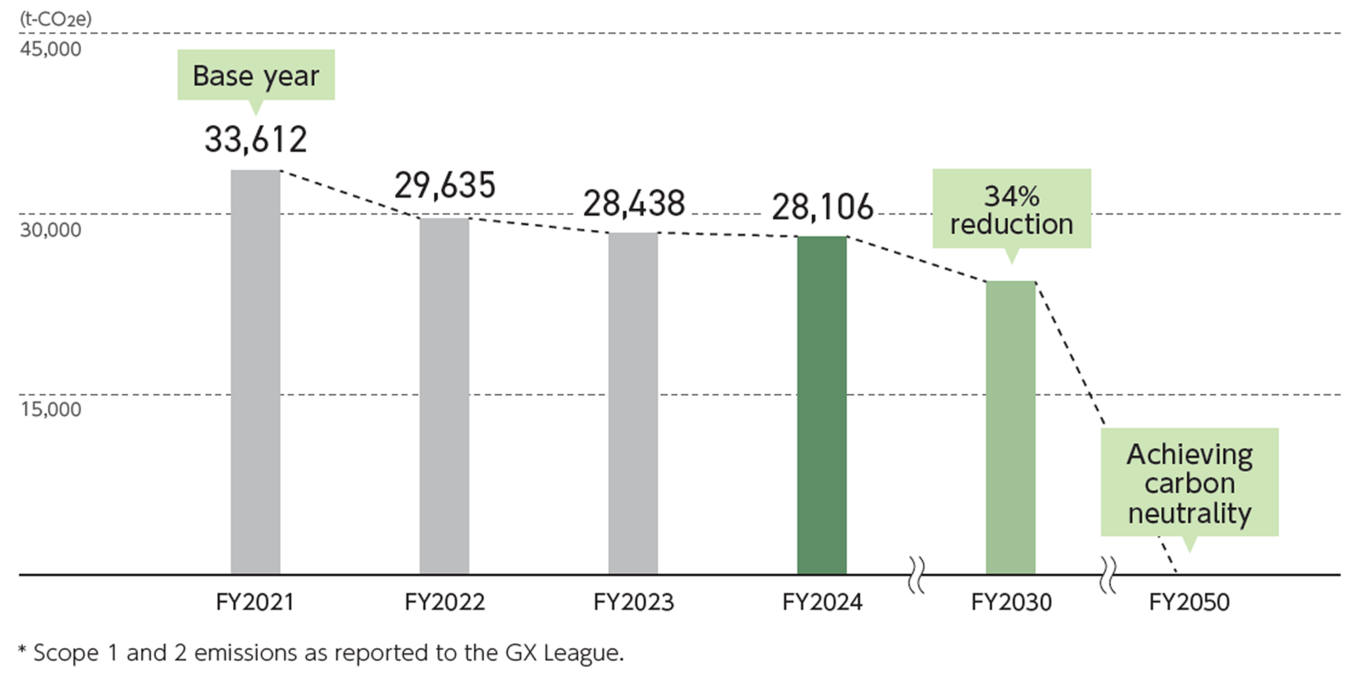
For data on climate change, please refer to our Sustainability Data.
Internal reference display of internal carbon pricing (ICP)
To strengthen our response to climate change risks, we have introduced a system that allows us to check carbon costs internally. This system assigns a price to the greenhouse gas emissions of the products we handle, which is used as a reference for transactions. The price is based on the IEA's "World Energy Outlook," using $140/t-CO2 as a reference for 2030. This is a trial initiative to enhance our ability to respond to future risks, and there are no plans to disclose it externally.